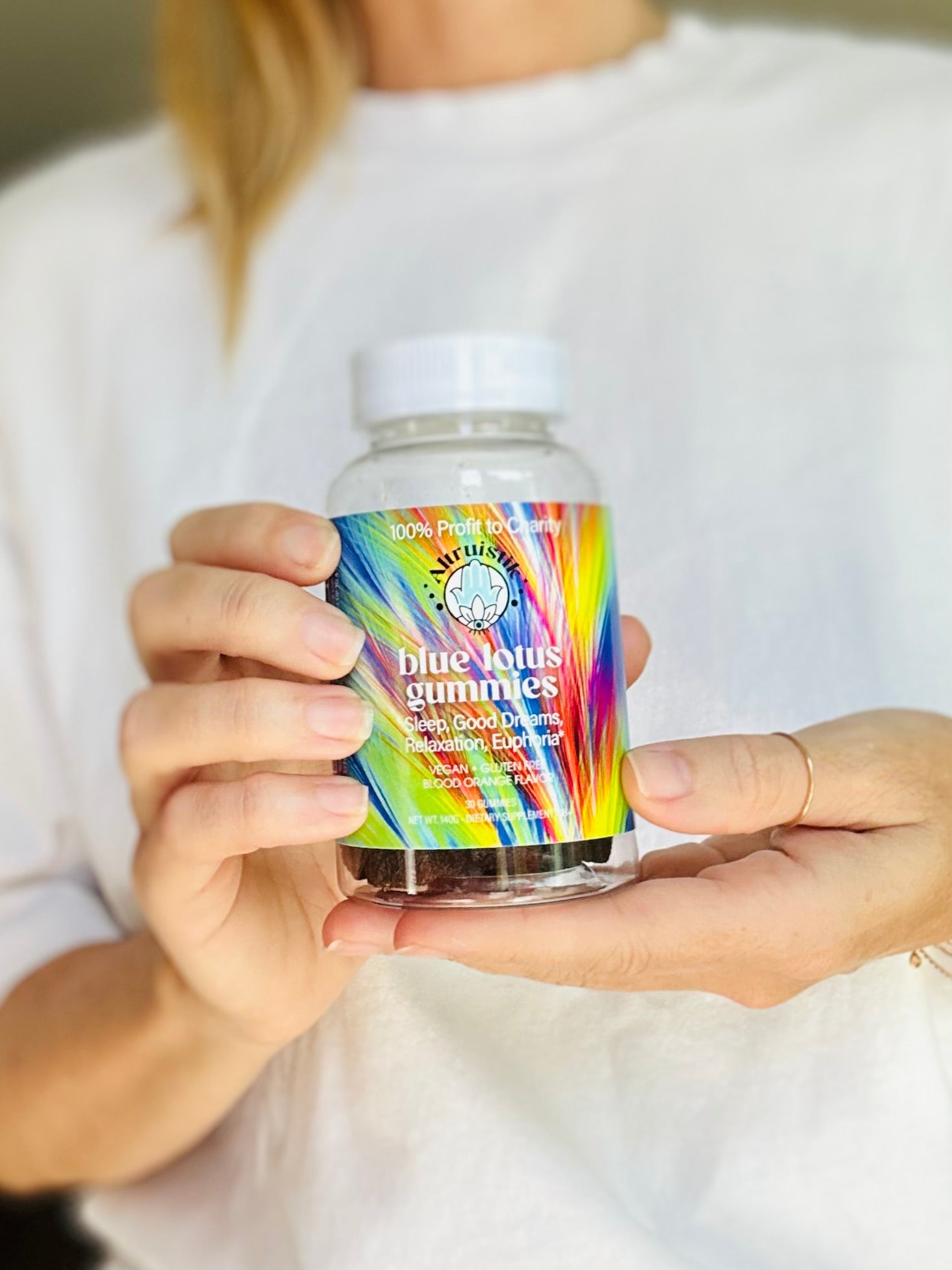
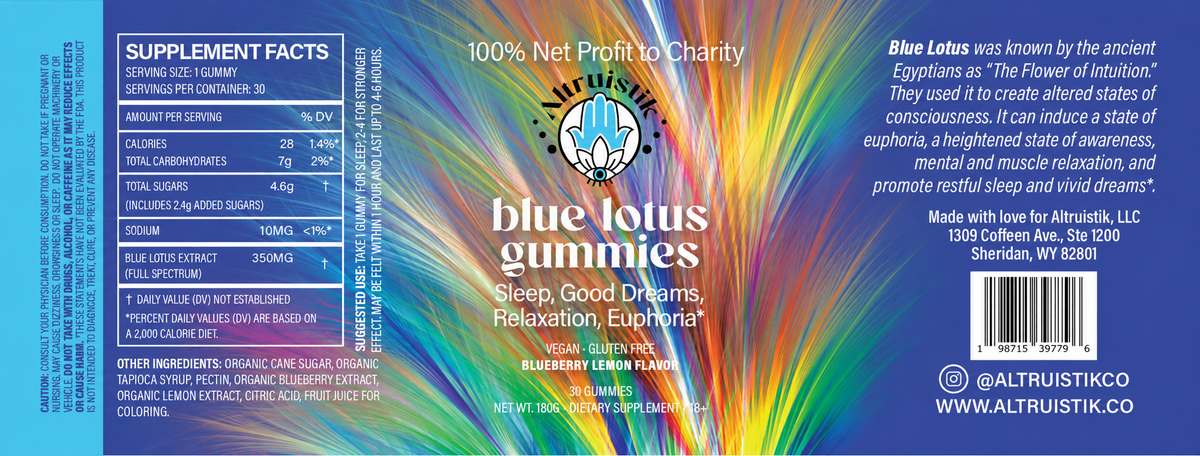
Blue Lotus (Nymphaea caerulea), a revered flower of ancient Egypt, is gaining immense popularity in modern wellness and herbal circles for its purported relaxing, mild euphoric, and dream-enhancing properties. However, its legal status is one of the most common—and most confusing—questions posed by consumers.
The answer isn't a simple "yes" or "no." It requires understanding the nuances between botanical regulation, food safety standards, and controlled substance laws across different jurisdictions. Here is your detailed guide to navigating the complex legal landscape of Blue Lotus.
🌺 The Botanical vs. The Controlled Substance: The FDA Stance

The core of the confusion lies in how Blue Lotus is classified by key governmental agencies, particularly in the United States.
- Federal Legality (Controlled Substances Act): Blue Lotus is NOT listed as a Controlled Substance by the U.S. Drug Enforcement Administration (DEA). This means, at the federal level, it is generally legal to buy, possess, and sell the raw botanical material in most of the U.S.
- The FDA Ambiguity (The Food/Dietary Supplement Issue): The U.S. Food and Drug Administration (FDA) has historically taken a cautionary stance. The FDA has at times classified Blue Lotus (Nymphaea caerulea) as a "poisonous substance" or, more accurately, has not approved it for use as a food ingredient or dietary supplement.
- The Practical Effect: Because it lacks FDA approval for consumption, vendors often market Blue Lotus products (dried flowers, tinctures) for "aromatherapy," "incense," "tea for ceremonial use," or "not for human consumption." This labeling is a legal strategy to bypass strict FDA regulation on food and supplements.
- Key Takeaway: It is federally legal to possess the plant, but often technically illegal to market it for human ingestion due to FDA non-approval, creating a murky gray area for consumers.
🗺️ State-by-State and Country-by-Country Breakdown

While generally legal worldwide, certain jurisdictions have implemented specific bans, often due to concerns over its mild psychoactive properties or fears of adulteration (lacing with synthetic substances).
A. United States: The One Exception
|
Status |
Location |
Notes |
|
Banned |
Louisiana |
Louisiana is the single, major exception in the U.S., classifying it as a controlled substance under state law. Possession is illegal. |
|
Legal |
All other 49 States |
Generally legal to buy and possess. However, local county laws or specific city ordinances may exist. |
|
Prohibited Use |
U.S. Military (DoD) |
The Department of Defense (DoD) has added Blue Lotus to its Prohibited Dietary Supplement Ingredients list. Service Members are strictly prohibited from using it. |
B. Global Overview (Varies Widely)
- Generally Legal: Blue Lotus is legal and widely available in most of Western Europe, Canada, Australia, and New Zealand. (e.g., in Canada, it's regulated as a natural health product ingredient).
- Specific Bans/Restrictions: Countries that have specifically banned or restricted the sale and possession of Blue Lotus include:
- Russia
- Poland
- Latvia
- Always check the local drug scheduling of your specific country before purchasing or traveling with the product.
If you are outside the 49 U.S. states where it is legal, assume restrictions exist until you have verified the local law. The term "botanical" does not always equate to "legal."
❓ Why the Confusion Exists: Misclassification and Synthetic Risks

The ambiguity is driven by three primary factors that often cause problems with law enforcement and customs officials:
- Chemical Content: Blue Lotus contains natural alkaloids, primarily apomorphine and nuciferine, which are known to have mild psychoactive and sedative properties. Because these compounds interact with neurotransmitters (like dopamine), authorities sometimes treat it with the same suspicion applied to other mind-altering herbs.
- The "Lacing" Problem: Law enforcement and military officials are particularly wary of Blue Lotus products sold on the black market or dubious online sites because the dried flower material is frequently laced with synthetic cannabinoids (K2/Spice). These synthetic chemicals are illegal controlled substances and can lead to severe adverse reactions. The fear of a laced product leads to aggressive scrutiny of the genuine botanical product.
- Interchangeable Names: Historically, some ancient Egyptian texts conflate the "Blue Lotus" (Nymphaea caerulea) with other water lilies or even the true "Sacred Lotus" (Nelumbo nucifera). This botanical confusion complicates legal identification, leading to misclassification by officials unfamiliar with the species.
The greatest immediate risk is not the plant itself, but the possibility that unregulated products may be contaminated with illicit, dangerous synthetic substances.
🔮 The Future of Blue Lotus Legislation

Given the current regulatory landscape, the future of Blue Lotus legislation is likely to follow a dual path:
- Increased Scrutiny over Vaping/Concentrates: As Blue Lotus extracts become more popular in vape and e-cigarette liquids, governments may impose age restrictions or specific public health warnings. This trend is driven by case reports of altered mental states in users, particularly when high concentrations are consumed via inhalation.
- The Regulatory Push for Supplements: Should more clinical research emerge substantiating the benefits of its alkaloids (like its potential as a sleep aid or anxiolytic), there could be a push for proper standardization and regulation as a recognized natural health product. This would move it out of the "gray area" and into the legally defined supplement market, increasing consumer safety.
- State-Level Stays: Barring any major safety crisis, the current general federal legality in the U.S. is likely to hold, though other states might follow Louisiana's example if local misuse becomes a public concern.

Tired of the stress and confusion surrounding your wellness choices?
Blue Lotus has offered natural relaxation and tranquility for thousands of years. By sourcing your Blue Lotus from a reputable vendor that prioritizes third-party testing and transparency, you can confidently enjoy this ancient flower.
Take the next step toward calm and restful sleep. Try our premium Blue Lotus tea today and experience the gentle, legal relief that has stood the test of time!