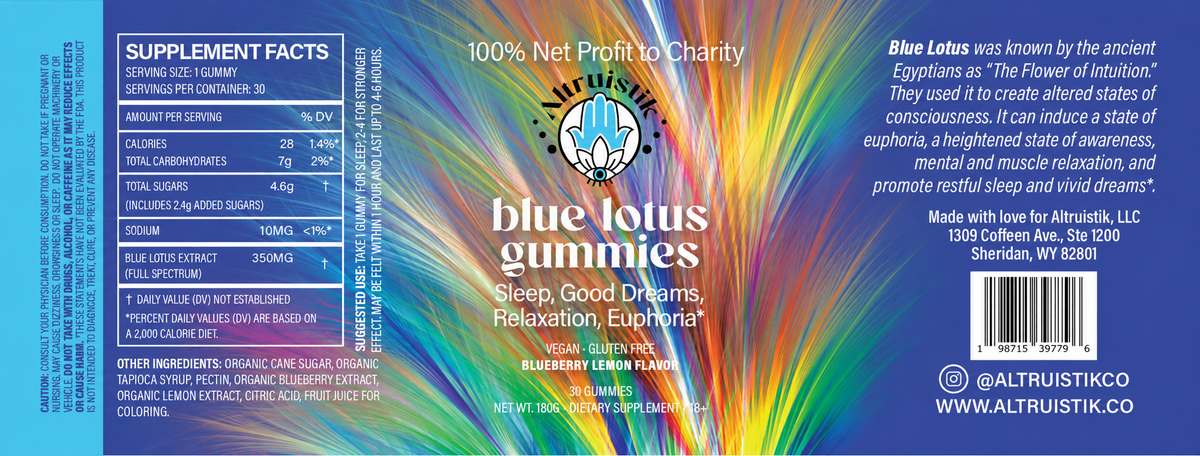
The Blue Lotus flower (Nymphaea caerulea) is often shrouded in myth and ancient Egyptian lore, but beneath its ethereal beauty lies a complex biochemical engine. While many enjoy it for its calming effects, few understand the sophisticated molecular dance occurring within the brain's neural pathways.
To truly appreciate this botanical, we must move beyond the surface and explore the pharmacology of aporphine alkaloids—the natural compounds that make Blue Lotus a unique bridge between ancient tradition and modern neuroscience.
🧬 The Alkaloid Family: Nuciferine and Aporphine

The physiological magic of Blue Lotus is primarily driven by two powerhouse active compounds: Nuciferine and Aporphine. These belong to a specific class of alkaloids that share a distinct, multi-ringed chemical structure.
- Nuciferine: This alkaloid acts as a versatile bio-regulator. Its molecular structure allows it to interact with multiple receptor sites, functioning as both a mild antipsychotic and an anti-inflammatory agent.
- Aporphine: Closely related to apomorphine (but significantly gentler), Aporphine is a natural dopamine agonist. It has the rare ability to cross the blood-brain barrier efficiently, where it begins to influence the central nervous system's emotional and motor centers.
- The Entourage Effect: While these alkaloids are potent on their own, they work synergistically within the plant. This natural combination produces a balanced effect that isolated synthetic compounds often fail to replicate.
🧠 The Neurotransmitter Dance: Dopamine and Serotonin

The "calm euphoria" associated with Blue Lotus isn't accidental; it is the result of precise interactions with the brain's mood-regulating receptors.
- Dopamine Modulation: Aporphine alkaloids primarily target Dopamine D2 receptors. By acting as a partial agonist, Blue Lotus doesn't "flood" the brain with dopamine; instead, it encourages the brain to use its own dopamine more effectively. This leads to a gentle lift in mood and a state of "alert relaxation."
- Serotonin Affinity: Beyond dopamine, research indicates that Nuciferine has an affinity for Serotonin (5-HT) receptors. These receptors are responsible for emotional stability and sleep-wake cycles.
- Euphoria vs. Sedation: This dual-action pathway—balancing the rewarding nature of dopamine with the stabilizing nature of serotonin—is why Blue Lotus provides a lucid, "dreamlike" calm rather than the heavy, numbing sedation found in other herbal relaxants.
⚖️ Addressing the Term "Psychoactive" Responsibly

In botanical science, the word "psychoactive" is often misunderstood. To navigate the world of Blue Lotus safely, we must define it with clinical accuracy.
- A Functional Definition: "Psychoactive" simply means a substance has the ability to affect the mind or behavior. Caffeine, chocolate, and even green tea are technically psychoactive.
- Not a "High": It is crucial to distinguish Blue Lotus from illicit substances. It does not produce hallucinations or a loss of motor control. Instead, its psychoactivity is subtle and restorative, manifesting as a reduction in mental "static" and an increase in sensory awareness.
- Responsible Use: Because it interacts with brain chemistry, Blue Lotus should be viewed as a wellness tool. It alters your internal environment to favor peace over panic, making it a responsible choice for those seeking to manage daily stress without intense impairment.
🔬 Therapeutic Potential: Beyond Simple Relaxation

Modern research is beginning to look at Blue Lotus through a neuroprotective lens, exploring possibilities that go far beyond evening relaxation.
- Neurodegenerative Support: Preliminary studies suggest that Nuciferine may have neuroprotective properties, potentially offering a natural avenue for research into conditions like Parkinson’s disease due to its dopamine-regulating effects.
- Natural Pain Management: By interacting with certain opioid-like receptors (without the addictive profile), Blue Lotus is being studied for its ability to modulate pain signals, offering a holistic alternative for mild chronic discomfort.
- Anti-Inflammatory Action: Chronic brain inflammation is a known driver of anxiety and cognitive decline. The antioxidant profile of Blue Lotus alkaloids helps neutralize free radicals, supporting long-term brain health and mitigating the physical effects of stress.

Unlock the Power of Plant-Based Neuroscience
Understanding the science of Blue Lotus transforms it from a mere tea into a sophisticated botanical ally. When you sip a warm infusion of these sacred petals, you aren't just participating in a ritual—you are providing your brain with the precise alkaloids it needs to harmonize its neurochemistry.
Why wait to find your mental equilibrium? Experience the perfect balance of ancient wisdom and molecular precision.
Give your brain the gift of aporphine-powered peace— Try our premium Blue Lotus tea today and feel the science of serenity in every cup!