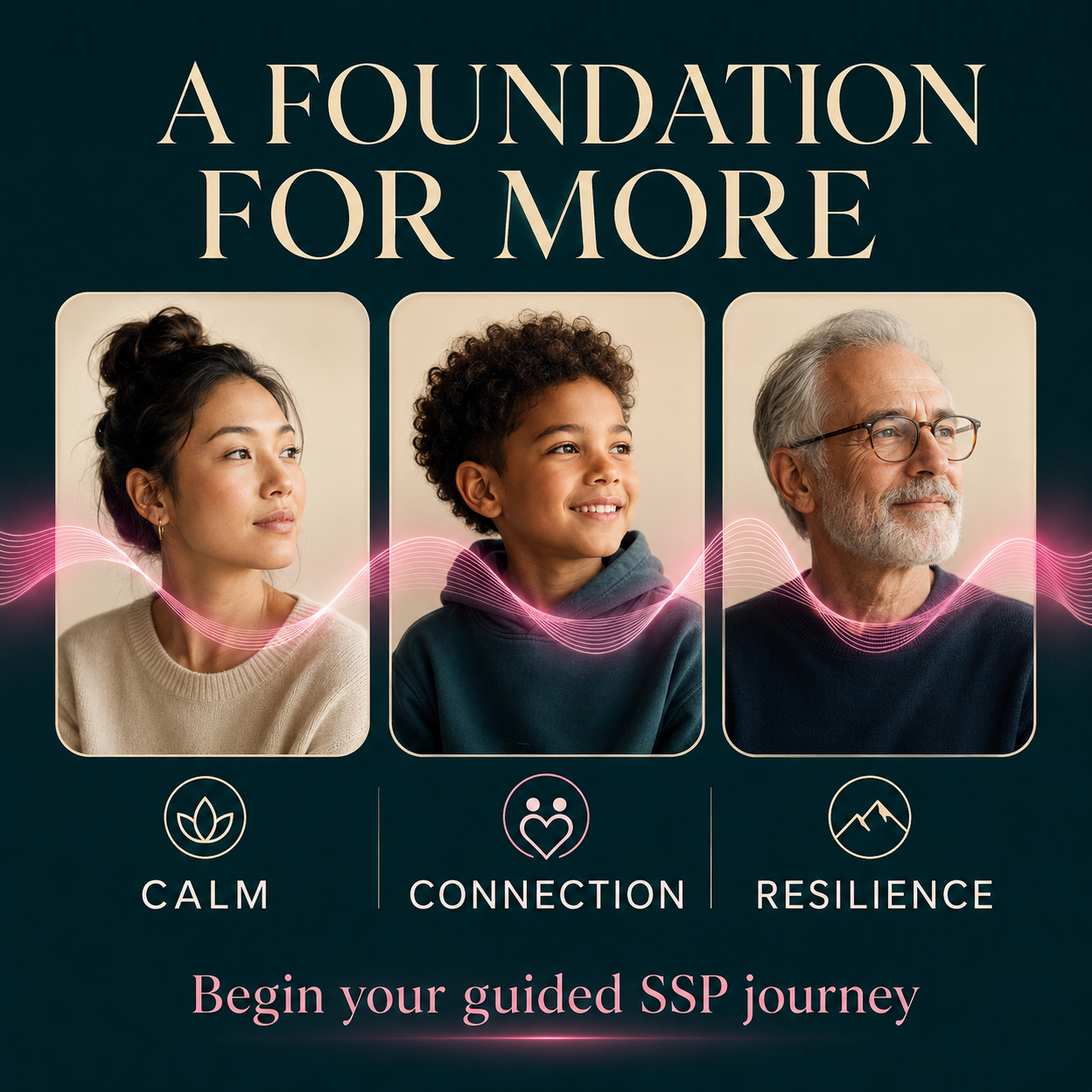
The Safe and Sound Protocol (SSP) is rooted in the neuroscience of the Vagus Nerve and Polyvagal Theory. But what does this mean for a person struggling daily with anxiety, chronic hyper-vigilance, or the lingering effects of trauma?
The most powerful proof of the SSP’s efficacy lies not in scientific diagrams, but in the tangible, life-changing shifts reported by real clients. The SSP is often described as a "nervous system tune-up," creating a foundation of safety that allows individuals to finally step out of survival mode.
Here, we share verified case studies that illustrate the diverse and profound impacts of integrating SSP into a therapeutic journey.
🏃 Case Study 1: The Hyperactive Adult

For adults struggling with chronic restlessness, difficulty focusing, and constant fidgeting, the nervous system is often stuck in a low-level "fight or flight" state. SSP aims to resolve this internal friction.
- The Client: Mark, a 34-year-old accountant, sought help for severe hyperactivity and an inability to sit still during long work meetings, a pattern he felt compromised his career. His core issue was sensory—he was overly sensitive to environmental stimuli and prone to anxiety.
- The SSP Outcome: After completing the initial five-day core protocol, Mark reported an immediate, yet subtle, change. He noticed he was no longer constantly jiggling his leg or tapping his pen.
- The Success Story: “My body just felt quieter. Before SSP, sitting still felt like torture; now, it feels neutral. The biggest win is the increase in focus; my brain isn't spending so much energy managing my body's constant need to move. It directly addressed my sensory-driven hyperactivity.”
- Key Takeaway: By improving the nervous system's capacity for safety, SSP reduced Mark's physical manifestation of stress, directly addressing his struggle with attention and hyperactivity.
👂 Case Study 2: The Anxious Teenager

Adolescence is difficult, but for trauma-affected teens, emotional volatility and sensory overload can make social and academic life nearly unbearable.
- The Client: Chloe, a 15-year-old high school student, struggled with auditory sensitivity (loud noises causing panic attacks) and extreme emotional reactivity. Her nervous system was primed to see minor issues as catastrophic threats.
- The SSP Outcome: Chloe’s therapist integrated the SSP during a period when she was struggling to tolerate the noise of the school cafeteria. Within weeks of completing the protocol, Chloe reported a significant reduction in her startle response.
- The Success Story: “The world is less loud. Before, a fire alarm would send me under the desk. Now, it's just annoying. I can also handle conflicts better; I used to go from 0 to 100 instantly, but now I have this pause button. I feel less angry and more able to talk instead of shouting.”
- Key Takeaway: The SSP’s auditory retraining reduced her auditory sensory defensiveness, leading directly to a wider emotional window of tolerance and decreased reactivity.
😴 Case Study 3: The Sleep-Deprived Professional

Trauma and chronic stress hijack the body’s ability to enter deep, restorative sleep. For professionals, this lack of rest is devastating to health and performance.
- The Client: David, a 50-year-old executive, suffered from chronic insomnia and night terrors, directly linked to past professional trauma. He relied heavily on medication but still experienced broken, unrefreshing sleep.
- The SSP Outcome: SSP was administered alongside Somatic Experiencing (SE) therapy. The first measurable shift was a reduction in the intensity of his night terrors; they became less frequent and less vivid.
- The Success Story: “I hadn’t realized how much tension I carried into bed. My therapist said SSP helped my dorsal vagal system stop hitting the ‘freeze’ button at night. Now, I sleep through the night, and I wake up genuinely rested. It’s not just that I’m sleeping; it’s that the quality of my rest is different. My trauma isn’t controlling my nights anymore.”
- Key Takeaway: By creating a deep state of physiological safety, the SSP helped resolve the underlying nervous system dysregulation that was keeping David’s body trapped in a perpetual state of defensive arousal, allowing for restorative sleep.
🔒 Ethical Disclosure and Verification: Trusting the Stories

While these successes are powerful, it is crucial to ensure they are shared ethically and transparently. Trust is fundamental to trauma healing.
- Client Privacy: All names and specific identifying details in these case studies have been altered or generalized to protect the privacy and confidentiality of the clients, adhering to strict professional and ethical standards.
- Verification: These stories are based on direct clinical feedback and verifiable progress documented by certified SSP providers. Success is measured not just by subjective reports but also by objective measures like heart rate variability (HRV), observed behavioral changes, and validated symptom checklists.
- Important Disclosure: The SSP is a therapeutic tool and not a quick-fix cure. Results vary widely based on the individual's history, the severity of their dysregulation, and their commitment to accompanying talk therapy.

Are you ready to stop managing your symptoms and start regulating your system?
The Safe and Sound Protocol offers a unique opportunity to address the physiological roots of anxiety, sensory issues, and trauma. By gently tuning your nervous system toward safety, it gives you the foundation you need for profound, lasting change.
Move beyond survival mode into a life of stability and calm. Partner with a certified professional— Start your journey to nervous system regulation with the Safe and Sound Protocol today!